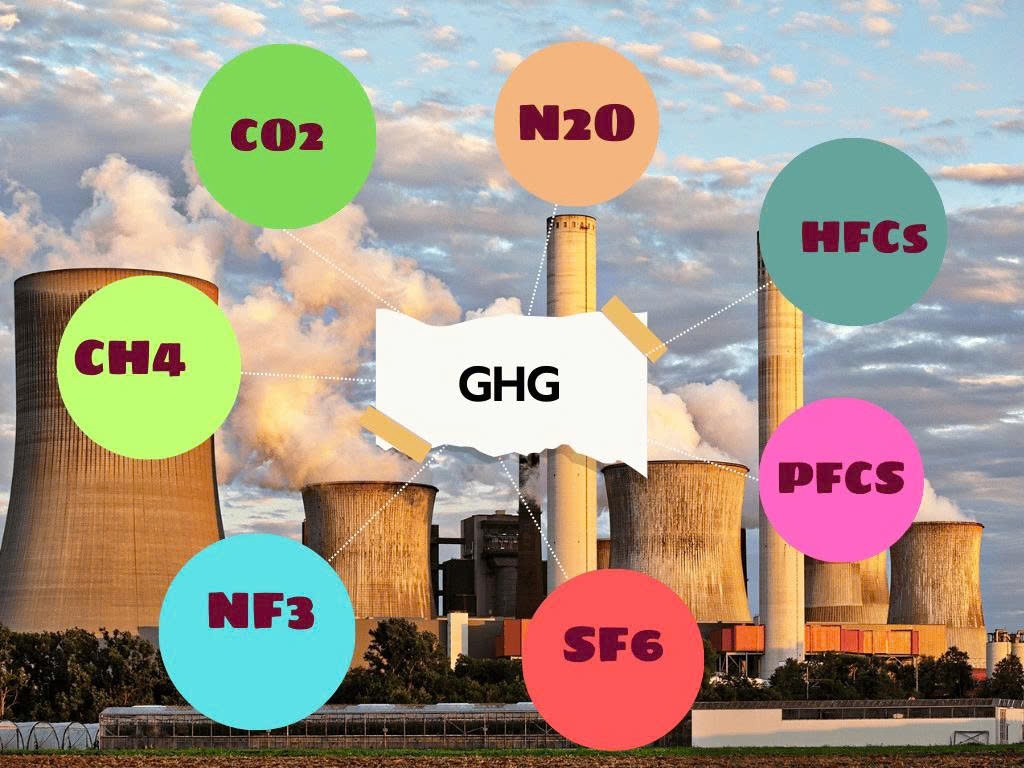
The Vietnamese garment industry plays a significant role in the global supply chain, yet it faces immense pressure from commitments to reduce greenhouse gas emissions and the increasing demand for transparency from international customers. In the journey towards sustainable development, two key tools that help businesses maintain their competitive advantage are the Greenhouse Gas Inventory (GHG Inventory) and the Science-Based Targets initiative (SBTi).
Greenhouse Gas Inventory – The First Step in Carbon Management
A Greenhouse Gas Inventory is the process of measuring and reporting emissions across three scopes:
- Scope 1: Direct emissions from sources owned or controlled by the company (e.g., boilers, incinerators, trucks, power generators).
- Scope 2: Indirect emissions from purchased energy (e.g., electricity, steam, heating).
- Scope 3: Emissions across the entire value chain (e.g., raw materials, logistics, product use, end-of-life treatment).
According to the GHG Protocol, an inventory helps companies identify "hotspots" of emissions and develop effective reduction plans. Without inventory data, any commitment is merely symbolic and lacks credibility.

SBTi – Turning Data into Actionable Commitments
While inventory is about measurement, SBTi is the tool that helps companies turn numbers into specific targets. SBTi confirms that the company’s emission reduction targets align with climate science, contributing to keeping global warming well below 1.5°C as per the Paris Agreement.
In the garment industry, major brands like H&M, Nike, and Adidas have set targets with SBTi and require their suppliers to take similar action. According to SBTi (2024), over 7,000 companies worldwide, spanning various regions and industries, have set science-based emission reduction targets. This signals that joining SBTi has become an international standard, no longer just an option.
The Link Between Greenhouse Gas Inventory and SBTi
Greenhouse Gas Inventory and SBTi are closely interlinked as two steps in the same management cycle. The inventory provides the data foundation, giving the company insight into current emission levels and sources. Based on this, SBTi becomes the commitment pathway, helping the company define specific emission reduction targets, with a timeline, and internationally recognized.
If the inventory is like a "map showing the current position," SBTi is the "destination" and "pathway" forward. Without an inventory, companies cannot set reliable targets. Conversely, a SBTi target would be meaningless without transparent inventory data.
As environmental governance requirements become stricter, the Greenhouse Gas Inventory and SBTi are complementary tools: measurement to manage, and commitment to action. For the garment industry, one of Vietnam’s key export sectors, implementing GHG inventories and engaging in SBTi not only helps comply with domestic environmental laws (Law on Environmental Protection 2020, Decree 06/2022) but also opens up opportunities to integrate more deeply into the global sustainable supply chain.