The global textile industry currently emits about 4 billion tons of CO₂ annually, accounting for 10% of global greenhouse gas emissions (ClimateSeed, 2024). Vietnam is one of the leading garment exporters with a revenue of USD 44 billion, an 11% growth rate, and is the world’s second-largest textile exporter. This puts increasing pressure on the industry due to international climate commitments and environmental standards, particularly from the EU and the US. In this context, building a green supply chain becomes the key for the textile industry to maintain growth while meeting sustainability demands.
In Vietnam, the government has issued the Textile and Leather Industry Development Strategy for 2030, Vision 2035 (Decision 1643/QĐ-TTg). This strategy emphasizes that the industry’s growth must align with environmental protection, social responsibility, increased domestic sourcing of raw materials, the adoption of a circular economy, and compliance with international greenhouse gas emission reduction commitments. Additionally, the 2020 Environmental Protection Law and Decree 08/2022/ND-CP impose stricter requirements regarding environmental permits, wastewater management, emissions, and waste disposal.
So, what are the solutions for a green supply chain in the context of Vietnam?
1. Sustainable Materials
- Develop domestic yarn, weaving, and dyeing industries to reduce dependence on imports.
- Encourage the use of recycled yarn, organic cotton, and bio-based materials to meet the increasingly stringent traceability requirements of the EU market. For example, the Better Cotton Initiative (BCI) helps companies prove that they are using sustainably produced cotton, reducing water and chemical consumption.


2. Cleaner Production
- Implement new resource-efficient technologies, such as water-saving dyeing processes, combined with recycling and reusing wastewater.
- Participate in international initiatives like the ZDHC Roadmap to Zero to manage chemicals safely. Many brands, such as Zara/Inditex, adopt the Green to Wear (GTW) standard to evaluate, classify, and improve the environmental performance of their suppliers.
3. Green Logistics and Localization
- Develop textile industrial clusters in key regions to shorten transportation distances and reduce CO₂ emissions.
- Optimize transportation systems, use recycled packaging, and gradually transition to eco-friendly transport vehicles. In fact, many companies have partnered with InterLOG to implement green logistics, helping reduce carbon footprints in logistics.

4. Transparency & Traceability
- Apply international standards to measure and disclose environmental impacts. A notable example is the Higg FEM (Facility Environmental Module) – a tool developed by the Sustainable Apparel Coalition to help factories assess, report, and improve their environmental performance.
- Companies can also implement Digital Product Passports under the EU Sustainable Textile Strategy (2022). Additionally, adopting Environmental Product Declarations (EPD), a verified and registered document, provides transparent and comparable information about the environmental impact throughout the product lifecycle.
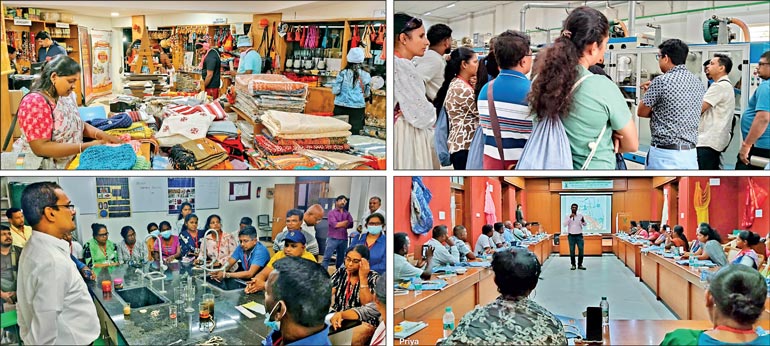
5. Training & Capacity Building
- Build a team of technicians and managers with expertise in quality and environmental management.
- Raise awareness across the entire supply chain about circular economy principles and social responsibility.

In Vietnam’s context, building a green supply chain in the textile industry is not just about meeting the requirements of the EU or the US, but also aligns with the national roadmap set out in Decision 1643/QĐ-TtG. This is the path for the textile industry to reduce export risks, save long-term costs, enhance the “Made in Vietnam” brand, and, most importantly, contribute to the sustainable development goals.